Back to Portfolio
DHANUSH SAAGAR PROTEIN TRACKER
UX CASE STUDY

Most beginners don't need a nutrition tracker. They need a simpler way to track protein.

A mobile app concept designed to help beginner gym-goers track protein consistently without managing the complexity of full nutrition tracking.

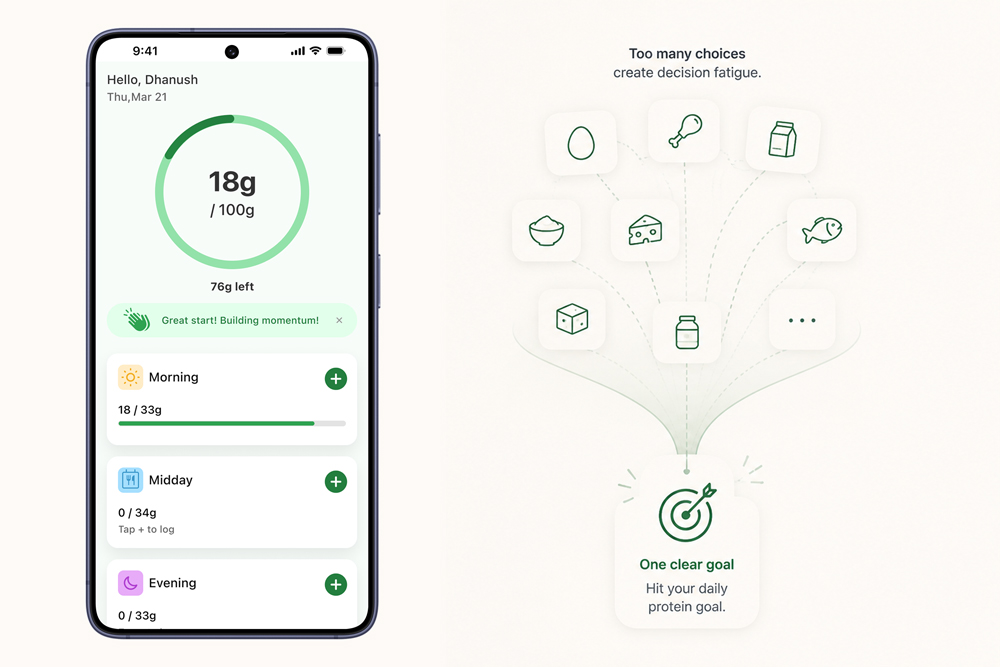
Protein Tracker Case Study Hero Mockup

A protein-first tracking experience designed to help beginners build consistency before introducing advanced nutrition tracking.

SECTION 01 • CONTEXT

A focused approach to protein tracking

Protein Tracker is a mobile app concept designed for people who have recently started going to the gym and want a simple way to keep track of their daily protein intake.

For many beginners, protein is one of the first nutrition goals they are introduced to. However, staying consistent can be difficult when tracking becomes time-consuming or complicated.

This project explores how a focused tracking experience could help beginners build a sustainable habit around meeting their daily protein goals.

SECTION 02 • PROBLEM

The problem isn't tracking. It's too many decisions.

Most people who start going to the gym aren't trying to master nutrition on day one. They're usually trying to do something much simpler: eat enough protein to support their fitness goals.

However, many nutrition apps immediately introduce calories, carbohydrates, fats, fiber, serving sizes, food databases, and multiple nutritional targets at the same time.

A simple meal quickly turns into a series of decisions.

Users need to search for foods, choose the correct entry, adjust quantities, and interpret several nutritional values before they can answer a basic question:

"Did I get enough protein today?"

For beginners, the challenge is often not tracking itself. It's staying consistent when every meal requires effort.

OBSERVED PATTERN

The effort required to log a meal often felt greater than the value users received from tracking it. What should have been a simple daily habit gradually started to feel like work.

SECTION 03 • RESEARCH

What makes tracking hard for beginners

To understand why people stop tracking consistently, I reviewed fitness app reviews, online discussions, and spoke informally with beginner gym-goers. While the sources were different, the frustrations were surprisingly similar.

USER REVIEW

"By the time I log a simple meal, it feels like work."

— Play Store Review
INFORMAL USER CONVERSATION

"I know I should track protein, but tracking everything else feels overwhelming. I usually just estimate."

— Beginner Gym-Goer
REPEATED PATTERN

"Searching and selecting food every time gets annoying, so eventually I stop logging."

— Play Store Review
WHAT I FOUND

Across reviews and informal conversations, a common pattern emerged: beginners rarely stopped caring about protein. Instead, they stopped tracking accurately. As logging became more effortful, users began estimating their intake or abandoned tracking altogether.

SECTION 04 • WHAT I REALIZED

What I realized

After reviewing user feedback and reflecting on my own experience, one thing became clear:

"Am I getting enough protein today?"

For most beginners, this was the only question that mattered.

Yet many nutrition apps required users to think about calories, fats, carbohydrates, serving sizes, and dozens of other metrics before they could answer it.

This shifted the direction of the project.

01

One goal at a time

Focus on protein before introducing additional nutritional metrics.

02

Make logging feel effortless

Reduce the number of steps between eating a meal and recording it.

03

Make progress obvious

Help users understand where they stand at a glance.

SECTION 05 • DESIGN RESPONSE

Reducing decisions through a single clear goal

DESIGN DECISION 01

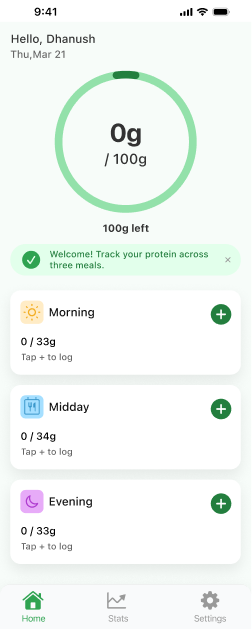
Start with one clear goal

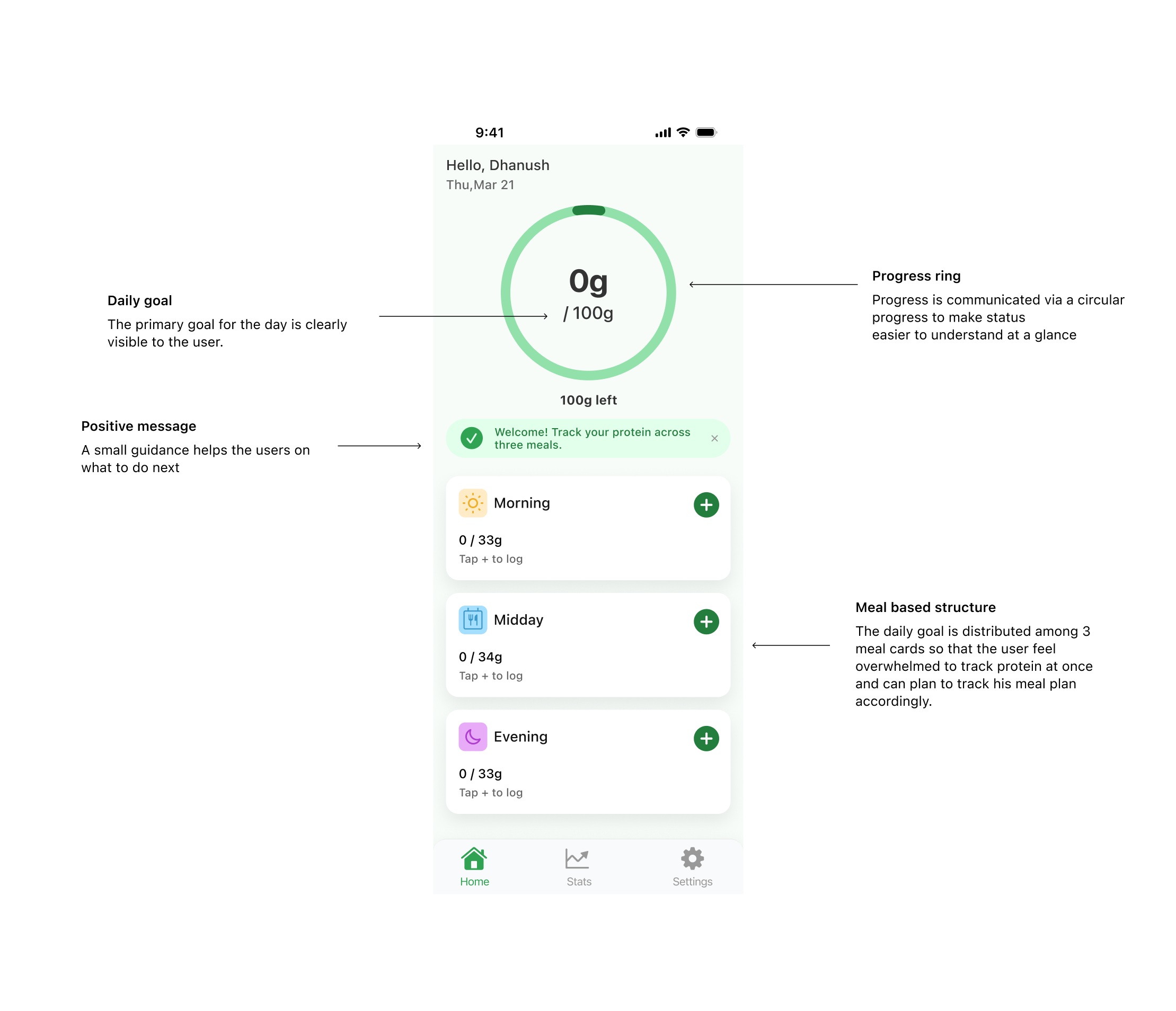
Most beginners are not trying to optimize every nutritional metric. The experience starts by focusing on a single daily protein target.

Protein Tracker Home Dashboard Mockup Screen

Dashboard focused on daily protein progress.

DESIGN DECISION 02

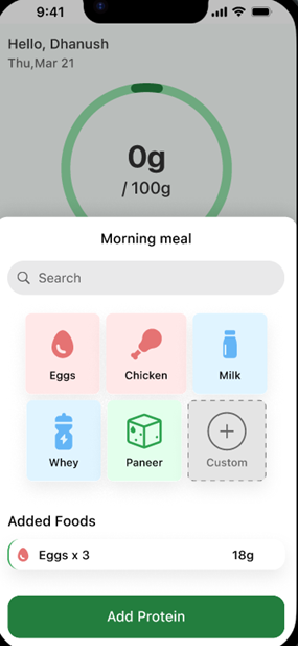
Make logging feel effortless

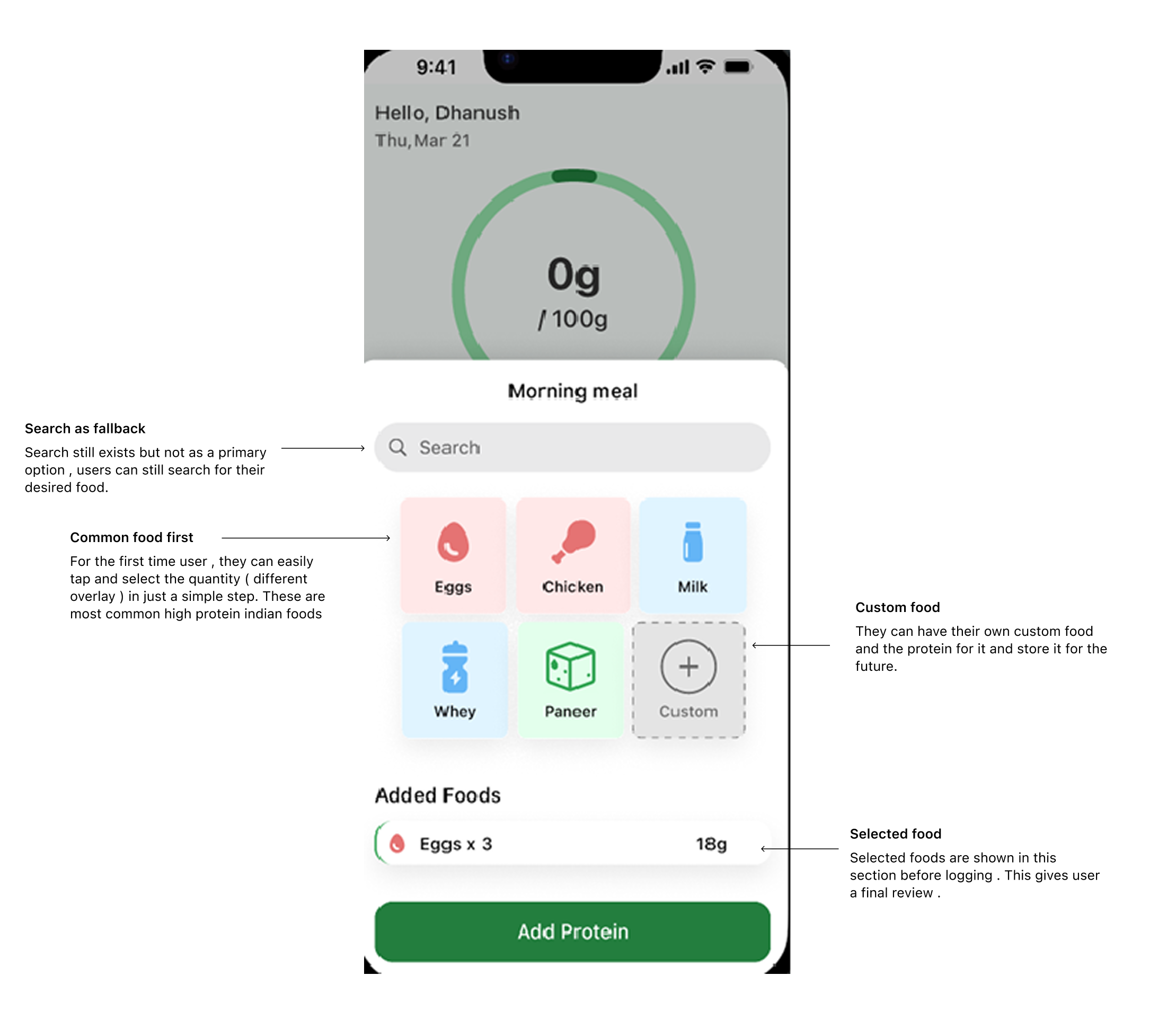
Logging should feel quick enough to become part of a daily routine. Instead of searching databases and comparing entries, users can log common foods through simple tap-based actions.

Protein Tracker Quick Custom Log Gesture Screen

Tap-based protein logging flow.

DESIGN DECISION 03

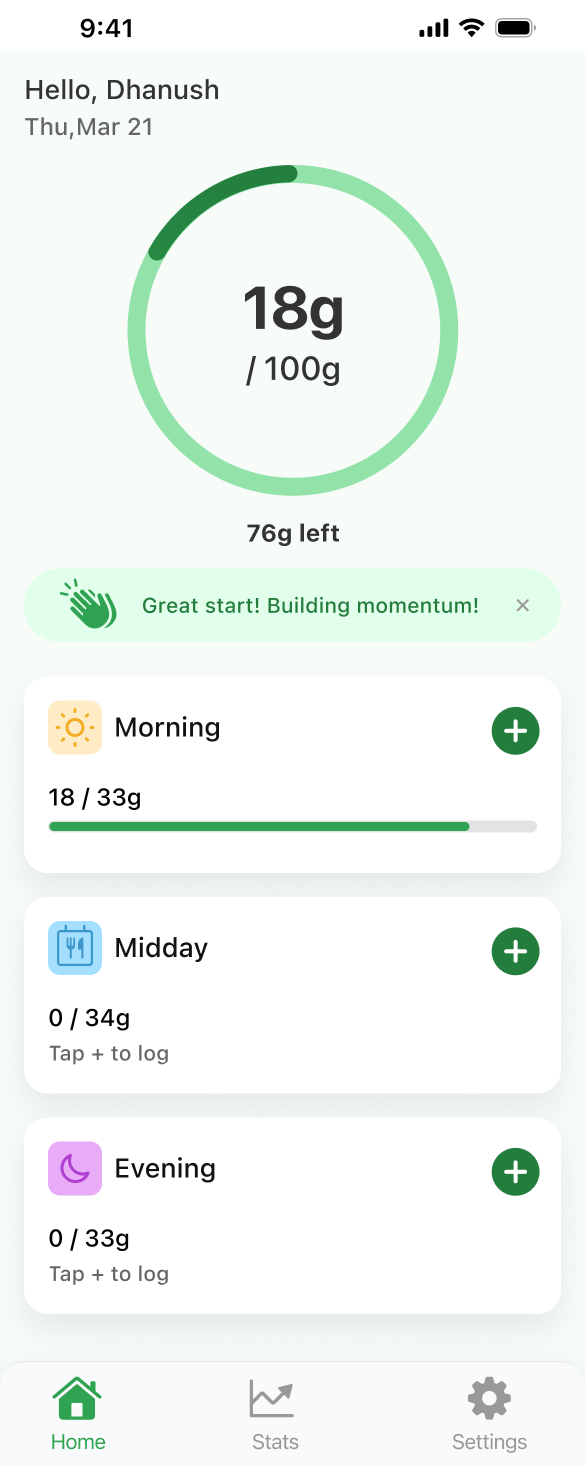
Show progress immediately

Every action should create visible feedback. Users instantly see how their protein intake contributes toward their daily goal.

Protein Tracker Progress State Confirmed Screen

Updated progress after logging protein.

SECTION 06 • INTERACTIVE PROTOTYPE

See the complete experience in action

This prototype demonstrates how beginners can track protein without navigating complex nutrition workflows.

One clear goal

Users begin with a single target: reaching their daily protein goal.

Faster logging

Common foods can be logged through quick actions instead of repeated searching and data entry.

Immediate feedback

Progress updates instantly after each action, helping users stay aware of their daily intake.

SECTION 07 • DESIGN BREAKDOWN

Breaking down the final experience

The final solution was shaped by a series of small decisions aimed at reducing effort and helping beginners stay consistent with protein tracking. Rather than introducing new features, these screens focus on making the core habit easier to repeat.

HOME SCREEN BREAKDOWN

Protein Tracker Interface Architecture Breakdown

Reserved space for annotated home screen explaining key design decisions and information hierarchy.

QUICK LOGGING BREAKDOWN

Protein Tracker Quick Custom Log Gesture Breakdown

Reserved space for annotated logging overlay explaining how common actions were simplified and streamlined.

SECTION 08 • SUCCESS METRICS

How I would measure success

Because this is a concept project, these metrics were not measured. However, they would be the primary indicators used to evaluate whether the experience successfully improved consistency for beginners.

METRIC WHY IT MATTERS
Daily Logging Consistency Measures how often users return to log protein each day. A higher consistency rate indicates the habit is becoming part of a user's routine.
Day 7 Retention Measures how many users continue tracking after their first week. This helps evaluate whether reducing effort improves early retention.
Time to Log a Meal Measures how quickly users can complete a logging action. Faster logging suggests reduced friction and lower effort.
SECTION 09 • TRADEOFFS

What this solution does not solve

TRADEOFF WHY
This isn't a complete nutrition tracker. The experience focuses on helping beginners build a protein-tracking habit first, rather than managing every nutritional metric from day one.
Protein values may not always be perfectly accurate. Reducing effort was prioritized over precise nutritional calculations. The goal was to make tracking easier to maintain consistently.
Experienced users may outgrow the product. As users become more familiar with nutrition, they may eventually need deeper analytics and more advanced tracking features.
SECTION 10 • FUTURE OPPORTUNITIES

What could come next

Adaptive food presets

Frequently logged foods could automatically surface over time.

Smart suggestions

The system could recommend foods based on previous intake patterns.

Barcode scanning

Reduce manual entry for packaged foods while maintaining simplicity.

Habit reinforcement features

Subtle reminders and progress milestones could further support consistency.

SECTION 11 • REFLECTION

What I learned

Before working on this project, I assumed nutrition tracking apps became more valuable by helping users track more information.

While researching beginners, I noticed something different. Most people weren't trying to optimize every nutritional metric from day one. They were usually trying to answer a much simpler question:

"Am I getting enough protein?"

This project explored what would happen if that goal became the primary focus of the experience.

I still believe comprehensive nutrition tracking is important. Different people have different goals, and many users eventually need visibility into calories, carbohydrates, fats, and other nutritional metrics.

However, for beginners who are simply trying to build a consistent habit around protein intake, the complexity of traditional tracking tools can become a barrier rather than a benefit.

This concept was an exploration of how reducing decisions and focusing on a single goal could make tracking feel more approachable, helping users build consistency before introducing additional complexity.